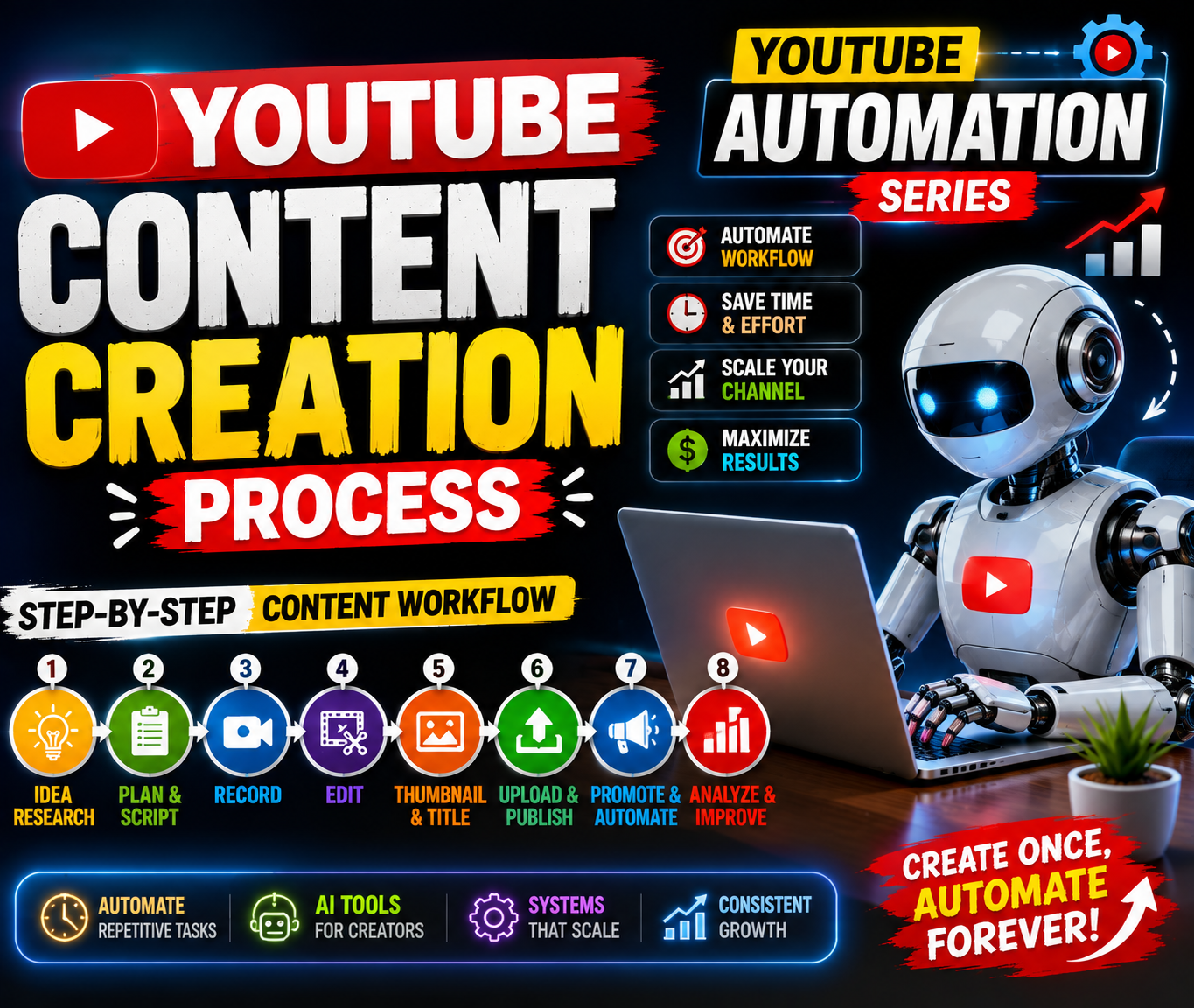
YouTube Content Creation Process
For Academia and Industrial Mentor, use a repeatable system rather than creating videos randomly:
Research → 2. Plan → 3. Script → 4. Record → 5. Edit → 6. Optimize → 7. Publish → 8. Promote → 9. Analyze → 10. Improve
Research & Idea Generation
Focus on 3–5 content pillars.
For Example:
📚 Academia & education
💼 Career counseling
📊 Accounting & finance
🏭 Industrial skills & management
🤖 AI, technology & digital productivity
Find questions people are actually searching for and turn them into problem-solving videos.
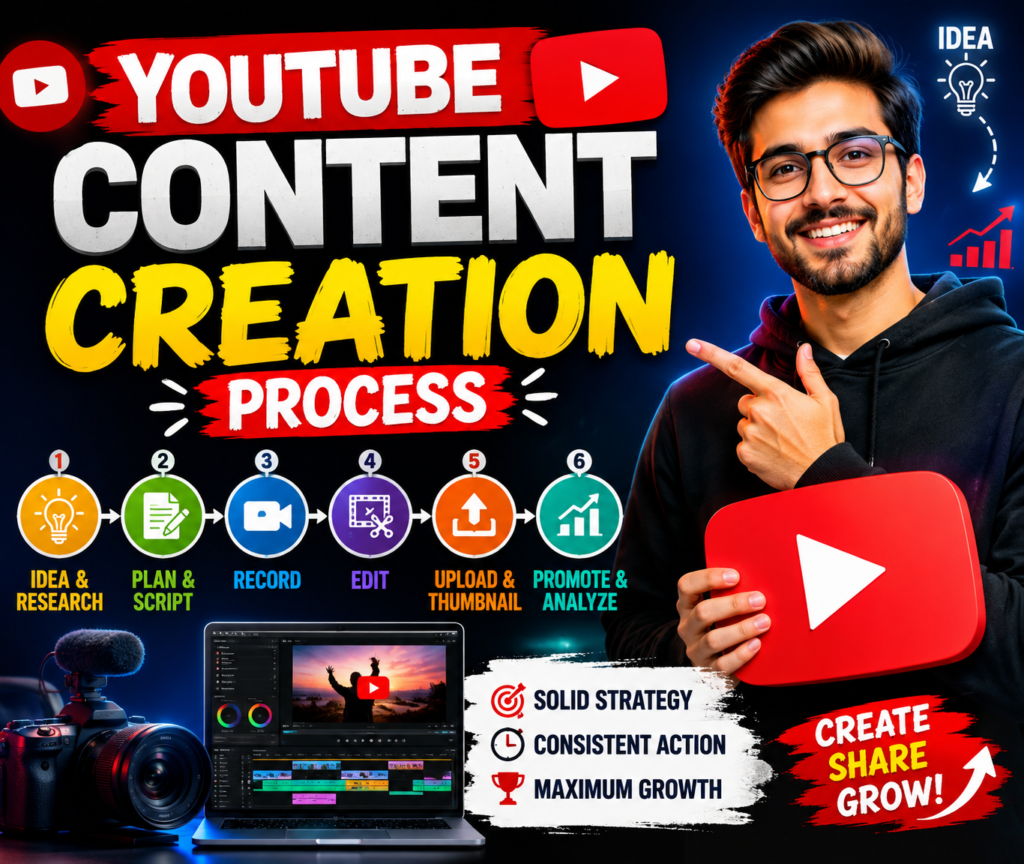
Choose the Format
Mix Strategy:
- Shorts: quick tips, facts, hooks, definitions
- 5–10 minute videos: tutorials and explanations
- 10–20 minute videos: deep educational content
- Series: connected videos around one subject
Create a Strong Hook
The first 5–15 seconds should immediately establish the value.
Example:
“If you’re an accounting student and want to build a career beyond traditional accounting, these 5 skills could completely change your career path.”
Build the Video. A simple structure:
Hook → Problem → Explanation → Examples → Practical solution → Summary → Call to action
Avoid long introductions. Deliver useful information early.
Production
Prepare:
- Script or bullet-point outline
Recording
- Voice recording
- Camera/screen recording
- Graphics and diagrams
- B-roll where useful
- Captions/subtitles
- Consistent branding
Editing
Prioritize clarity and retention, not excessive effects.
Remove:
- Long pauses
- Repetition
- Unnecessary introductions
- Mistakes
- Dead space
Add visual changes when they help explain the subject.
YouTube Optimization
Before publishing, optimize:
- Title: clear + curiosity/value
- Thumbnail: one strong visual idea
- Description: useful summary + relevant keywords
- Chapters: for longer videos
- Tags: secondary—not the main growth mechanism
- Playlist: connect related videos
Publish Consistently
A sustainable starting schedule could be:
Day Content
- Monday → Short
- Tuesday → Long-form educational video
- Wednesday → Short
- Thursday → Career/industry video
- Friday → Short
- Saturday → Long-form video
- Sunday → Analytics + planning
The exact frequency matters less than maintaining a workflow you can sustain.
Promote & Repurpose
One long-form video can become:
- 1 YouTube video
- 3–5 Shorts
- community post
- Instagram/Facebook content
- LinkedIn post
- infographic.
This dramatically increases the value of each research session.
Analyze & Improve
After publishing, examine:
- Impressions & CTR → Is the topic/title/thumbnail attractive?
- Audience retention → Where do viewers leave?
- Average view duration → Is the video delivering value?
- Traffic sources → How are people discovering it?
- Returning viewers → Are you building an audience?
- Subscribers gained → Which topics attract the right audience?
Then repeat what works.
The Continuous Improvement Loop
Create → Publish → Measure → Learn → Improve → Create again
For Academia and Industrial Mentor, the ultimate goal should not simply be “upload more videos.” It should be:
Better topics + better hooks + better teaching + better thumbnails + better retention + consistent publishing.
This turns YouTube content creation into a system, rather than a collection of individual videos.
Social Links 🔗
YouTube: academiaandindustrialmentor
Facebook: academiaandindustrialmentor
TikTok: academiaandindustrialmentor
Instagram: academiaandindustrialmentor
LinkedIn: academiaandindustrialmentor
Pinterest: academiaandindustrialmentor
Medium: academiaandindustrialmentor
Quora: academiaandindustrialmentor
With the help of AI Tools: ChatGPT, Claude, Grok, Gemini, Deep Seek, Higgsfields and Beeble AI